Blogs

  • 1) Branding Beyond the Logo

    Each brand has its own DNA, representing the fundamental qualities and core essence that define it. This DNA includes a unique set of attributes, values, mission, and personality, shaping the brand’s identity and influencing audience perception.

    1. The Power of Brand Equity

      Brand equity, the value a brand adds beyond its functional attributes, stems from its reputation, customer loyalty, and emotional connection with your audience. Strong brand equity can influence customer preferences, allow for premium pricing, and provide a competitive edge. Branding is fundamentally about letting the audience recognize the true value and benefits of your products.

    2. Beyond Visual Design

      Many people associate branding primarily with visual design elements like logos and color schemes. However, effective branding encompasses much more. It involves creating and maintaining trust through every customer interaction. Every touchpoint—from initial exposure to post-sale experiences—matters.

      Consistency in engagement and representation is crucial, whether it’s through sales, customer service, or even interactions with job recruiters. Corporate culture and branding are intertwined. How your team interacts with customers and how customers perceive these interactions significantly impacts your brand’s reputation.

    3. Community Engagement as a Brand Strength

      Customers also want their voices to be heard and to feel involved in the brand’s mission, beyond just transactional relationships. In one initiative, I developed a community-focused product where, after each purchase, customers could choose a preselected non-profit organization to receive a donation. This partnership strengthened our brand by aligning our values with theirs, deepening the connection, and enhancing brand loyalty.

    4. Rebranding and Customer Partnerships

      I also led a rebranding effort that transformed a business into a lifestyle-focused entity. The success of this shift was rooted in strong customer partnerships, where we collaborated closely by building prototypes for early adopters to test before mass production and product launch. This approach not only strengthened customer relationships but also ensured our offerings resonated deeply with our target audience.

    5. Conversations, Not Monologues

      The use of language, style, and tone in conversations with your audience is also vital. How you communicate should align with your brand values and resonate with your audience, ensuring a consistent and engaging experience.

      Effective branding involves creating a dialogue rather than a monologue, where feedback is welcomed and responses are thoughtful. This approach fosters a deeper connection and encourages a more meaningful interaction, allowing your brand to truly engage with its audience and build stronger relationships.

    6. Leveraging Customer Feedback

      Customer feedback after a product release is crucial for optimizing products and learning valuable lessons. By integrating feedback and maintaining consistency in every aspect—including language and tone—you build a brand that stands out and fosters lasting loyalty. This approach ensures that your brand continuously improves and remains relevant, creating meaningful connections with your audience and driving long-term success.


  • 2) Guide to Successful Marketing

    With a deep understanding of your audience, the next crucial step is aligning your business objectives with their needs. When combined with insights into competitors and compelling storytelling, you gain the essential tools to elevate your marketing success. The following strategies reveal how to harness these principles for truly impactful results.

    1. Understanding Your Audience

      Effective marketing starts with a deep understanding of your audience. Research allows you to gather comprehensive insights into demographics, psychographics, lifestyles, purchasing behaviors, pain points, and preferences. Researching your leads and customers also enables you to execute an approach called customer segmentation.

      This is a process of dividing a target market into distinct groups based on shared characteristics, behaviors, or needs, allowing for more tailored marketing strategies and improved customer engagement and satisfaction. In-depth knowledge of your audience serves as the foundation for your success, guiding all subsequent strategies and initiatives.  
    2. Knowing Your Competitors

      Understanding the competitive landscape is crucial for positioning your brand effectively. Analyzing competitors allows you to identify their strengths, weaknesses, and unique selling propositions. By conducting thorough market research and competitive analysis, you can uncover opportunities for differentiation and develop strategies that set you apart. This knowledge not only shapes your messaging but also helps you anticipate market trends and respond proactively.
    3. Crafting Your Brand’s Narratives

      Storytelling is a powerful tool in marketing. By developing
      narratives that showcase how your brand empowers individuals to achieve their goals—whether enhancing their lives or alleviating pain points—you can connect on a deeper level. Delivering compelling visual and written communications effectively highlights your unique strengths and resonates with your audience. Successful communication is also contingent upon delivering tailored messaging that speaks directly to each target segment.

    By leveraging insights into your audience, conducting competitive analysis, and employing storytelling, you can effectively drive various marketing strategies. For example, these insights can guide decisions on product strategies, including pricing, market positioning, messaging, release timing, distribution channels, and promotional tactics. Building trust in your brand with leads and customers hinges on these critical actions, leading to impactful interactions. Ultimately, aligning business objectives with customer aspirations paves the way for creating meaningful experiences that resonate deeply.

  • 3) The Essential Guide to Online Content Strategy

    Crafting a robust digital content strategy begins with defining objectives and identifying the intended audience. It involves synthesizing valuable insights and devising a clear path forward using a blend of data analysis, market research, competitive analysis, and SEO exploration. By writing content that positions you as the solution to your readers’ needs, you can effectively convert customers into loyal patrons.

    When it comes to composing engaging and easily understandable content, let’s explore the key elements:

    1. Be Aware of Short Attention Spans

      Captivate your audience with short and concise content. Tailored messages capture attention and, readers stay engaged longer with content that interests or benefits them. For example, Gartner reports that longer, detailed email subject lines may result in high open rates because they allow for more targeted information. The optimal length is also determined by factors such as industry, subject matter, and the preferences of the readers.
    2. Get Visual, Get Results

      The old saying claims a picture is worth a thousand words. The 2018 research at the University of California, San Diego, while not quantifying a picture’s precise value in words, demonstrates its profound effect on individuals. Even a fleeting glimpse of an image, lasting just 10 milliseconds, can reportedly wield surprising influence over our behavior.
    3. Streamline Your Format

      To improve readability, break up large blocks of text with shorter paragraphs, subheadings, or white space.  Use bullet points and numbered lists for steps, key points, or data. Bold headings act as signposts, guiding readers through your content.  Finally, vary your sentence length and break up complex ideas for a smoother flow of information.
    4. Turn Trends into Triumphs: The Art of Newsjacking

      Incorporate trending news or timely topics into your content strategy with sensitivity and awareness. Take, for instance, the widespread excitement surrounding events like the solar eclipse. However, exercise caution in your choice of topics, avoiding those that may be offensive or off-limits to certain readers. Understand your audience thoroughly and ensure your content remains both relevant and engaging to them. Forge a clear and logical connection between your values and the trending topic at hand, fostering meaningful engagement and resonance.
    5. Master Memejacking for Engaging Content

      Memejacking thrives on content that sparks humor and carries viral potential. Timeliness is crucial for its success, as it relies on capturing the current cultural trends. The term “meme” originates from the Greek word “mimema,” signifying “something imitated,” typically appearing in visual formats. Memes excel in driving engagement, particularly on social media platforms, due to their easily digestible nature. They offer a cost-effective means of communication online, representing a prevalent mode of expression in today’s digital landscape.

    We’ve explored many facets of creating engaging and powerful content. Yet, while mastering copywriting is crucial, true effectiveness stems from aligning your writing with your goals and conducting thorough research on your market, industry, and competitors. Just like in any marketing endeavor, tailoring your content to resonate with your target audience’s interests will significantly impact the success of your online content strategy.

  • 4) How Customer Data Fuel Success

    Conversely, the younger 20% of our customer base demonstrated higher loyalty (“stickier”) and lower service costs. How was I able to perceive the demography and behaviors of our customers?

    I attributed the success to data analysis. Through data, I managed to create eight distinct customer segments, allowing me to discern their characteristics. This insight enabled me to determine which segments to let go, grow, or defend. What types of data did I acquire through this analysis of customer insights?

    1. Demographic Data:
      Socioeconomics attributes include gender, age, education, marital status, income, and occupation. In the example presented above, I was able to decipher the demography of our customers.
    2. Behavioral Data:
      I thoroughly examined data from various sources, including purchase history, product/service interactions, advertisements, and multiple channels like websites. For instance, in Google Analytics, I analyzed metrics such as page views, bounce rates, and time spent on site. In the bank scenario mentioned earlier, behavioral data revealed that 80% of our senior customers actively pursued deals and frequently switched when they found more attractive offers elsewhere.
    3. Psychographic Data:
      These insights unveil our customers’ personal values, interests, and political views. During the COVID pandemic, I closely monitored the impact of the crisis on public sentiments, including personal and political views. This careful observation guided the tone and style of our communications with customers, ultimately shaping our content strategies.

      Deep Dive into Personas
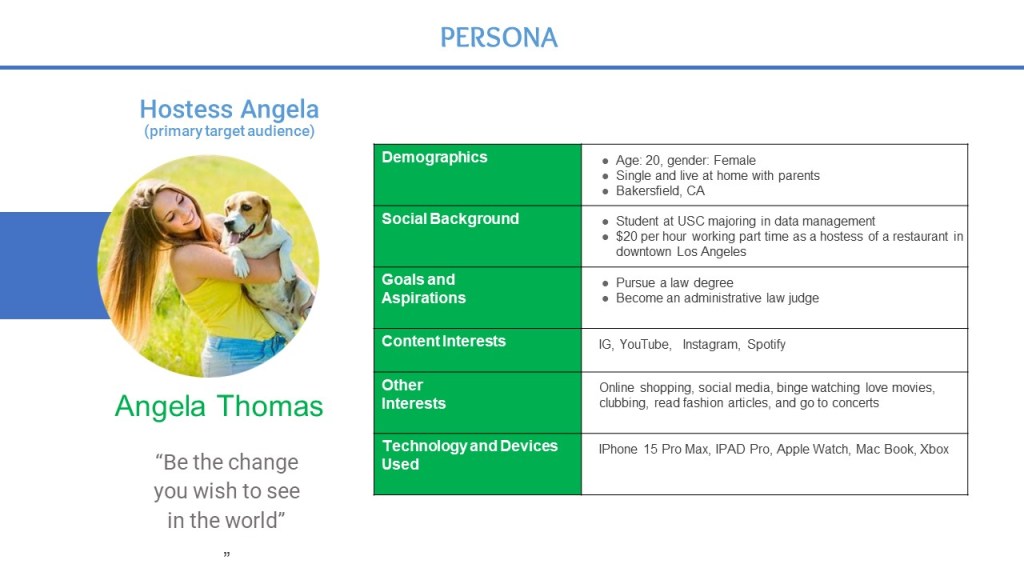
      Through data analysis, customers with shared characteristics can be grouped, a process known as segmentation. I assigned names and constructed customer profiles detailing specifics like ages, job titles, locations, goals, needs, and pain points. These profiles give rise to distinct personas, serving as representations of our ideal customers. An example is provided below.
    An example of persona

    The inclusion of various details about personas depends on the nature of the business. Some enterprises incorporate two or three personas, while others may utilize as many as ten. The quantity is not fixed; it varies based on your objectives, clientele, and products or services. Diverse identities are necessary because one-size-fits-all approaches are ineffective. Marketing strategies must be customized to accommodate individual differences. I even crafted “negative personas,” dubbed “bad apples,” representing those yielding negative ROI and warranting dismissal. In the upcoming blog, I will elaborate on the research process involved in constructing diverse personas.

  • 5) Navigate the Terrain of Customer Data

    While the internet offers a vast option of resources, the challenge lies in pinpointing the most reliable sources of information. My approach merges in-depth customer insights with broader trends to create a well-rounded picture. This involves directly engaging with customers through surveys, interviews, and relationship management to understand their needs firsthand. Collaborating with customer-facing teams unlocks their invaluable experience from daily interactions.

    Graph and chart

    Additionally, research on competitors shed light on customers, while social media analysis, Google trends, and website analytics offer a wider lens into customer behavior and preferences. This combination allows me to craft personas that are not just data-driven, but truly capture the essence of our customers. I also use research websites that provide complimentary data, including the following:

    1. The United States Census Bureau

      Data Tools and Apps – This is a fantastic starting point to dive into the various data types available such as:

      Census Business Builder – Provides businesses with data that can help with opening or growing a business.

      Explore Census Data – Offers demographic data from the latest census report.

      Business Dynamics Statistics Explorer
      Helps you find information about the numbers of businesses in different industries.

    2. The Bureau of Labor Statistics

      Discover valuable insights for your marketing strategy with this website’s data on employment and industry trends. Explore demographics with the Demographic Data Source and analyze industry performance with the Industry Productivity Viewer. These reports offer insights into the labor market and the production levels of various businesses.  Focus on reports and data points that specifically highlight business outputs.

    3. Pew Research Center

      This platform offers research findings derived from surveys designed to grasp people’s perspectives and behaviors across a broad spectrum of topics, including values, politics, religion, and current events. Additionally, it offers a more global perspective on data compared to the two preceding websites.

      Staying ahead of the curve isn’t just about chasing trends. Marketers, regardless of B2B or B2C focus, should be proactive in exploring available data to refine targeting strategies. The wealth of resources, like the demographic data sources mentioned earlier, empowers us to gain a deeper understanding of our customers.

      However, the key lies in strategically selecting the most relevant resources to achieve specific business goals. By embracing a data-driven approach, marketers can make informed decisions and optimize their campaigns for maximum impact.
  • 6) Turn Browsers into Buyers: Lead Nurturing Advantage

    Lead generation, a key part of inbound marketing, involves attracting potential customers and capturing their contact details (most commonly through forms), with the goal of nurturing their interest and converting them into customers. These leads, once qualified by marketers (also known as Marketing Qualified leads) as having a likelihood of making a purchase, are then passed to the sales team for further engagement and hopefully, a closed deal.

    1. Supercharge Your Sales Pipeline

      Offering useful content through multi-channels using targeting strategies is an effective lead nurturing technique. Acquiring as much information as possible from the leads and designing custom content to nurture them proves to be effective. Leverage a combination of channels such as emails, social media, infographics, blogs, white paper, websites, retargeting and follow-up by the sales team. Deliver personalized content according to the stages of the sales pipeline.

      Lead nurturing requires collaboration with the sales team. For instance, during my time as a marketer, I would regularly communicate my nurturing strategies to them, seeking their input. Given their frequent interactions with prospects and customers, they possess valuable insights. Working closely with the sales team is essential for success.
    2. Elevate your Brand

      Enhancing brand reputation plays a pivotal role in cultivating leads. During my tenure at a bank, I initiated a focus group aimed at uncovering the factors influencing individuals’ choice of banking institutions. One resounding determinant emerged: the brand itself. Subsequently, I devised a multifaceted approach to fortify our brand identity, positioning us as not only a provider of financial products and services but also as a beacon of financial literacy and security against scams.

      This initiative evolved into a comprehensive brand-building strategy that transcended product promotion. We endeavored to establish ourselves as a dependable financial ally, actively engaging in the dissemination of financial education and anti-scam measures. As our institution flourished, we recognized the significance of nurturing this reputation, acknowledging its pivotal role in engendering trust and empowering prospective clients.
    3. Assign Scores to Leads

      In the realm of sales and marketing, not every customer is the same. This also holds true for leads—they exhibit a range of behaviors and levels of interaction. Lead scoring comes into play by assigning points to leads and distinguishing them based on their actions.

      Visualize a continuum: at one extreme are hot leads, actively engaged and on the verge of making a purchase decision. At the opposite end lie cold leads, perhaps only filling out a contact form without displaying further interest. It’s essential to collaborate closely with the sales team to determine which actions warrant higher scoring.

      This scoring mechanism aids in prioritizing leads—those with higher scores are primed for a handoff to the sales team, whereas those with lower scores may benefit from additional marketing efforts before reaching the sales-qualified stage.

      Traditionally, our approach leaned heavily on outbound marketing, a unilateral strategy primarily aimed at driving sales. It revolved around promotions and sales pitches, often involving expensive printed materials sent to numerous households, which incurred substantial costs. Any errors in these materials necessitated costly reprints. Fortunately, today we have the advantage of tapping into various digital platforms to foster connections. To thrive, businesses must prioritize cultivating mutual relationships with their audience. Central to this is employing lead nurturing strategies that prioritize attentive listening and responsive engagement, fostering a dynamic two-way communication process.
  • 7) Connecting Success: The Crucial Role of Web Links

    Data-driven analysis plays a crucial role in identifying both low-performing and high-performing pages on your website. By understanding these dynamics, we can establish strategic connections between them, ultimately enhancing their overall performance. This process, often referred to as internal linking (or cross-linking), effectively distributes equity or link juice (authority and value) across your website, improving the search engine ranking and visibility of your content.

    Fruit juices

    Equity involves identifying pages with high impressions but low click-through rates (CTRs) and linking them to pages with high impressions, high CTRs, and low bounce rates. It also means linking from reputable sites where they pass their value to the website they link to. High value backlinks are usually those from the government, education or organization websites. This approach is particularly beneficial for new pages aiming to build SEO value. There are online platforms tools such as Semrush where you can conduct off-page SEO data analysis.

    Spiders conduct their crawl from the top to the bottom of the source code. Navigation links placed near the beginning are likely to be noticed first by search engines. Web developers can influence the crawl order by inserting specific codes in the HTML. Ensure that content is accessible within three link clicks and only connect pages if the transition is contextually relevant.

    Achieving high SEO rankings is a challenging task, but it’s crucial to a website’s success. Keep in mind the importance of shaping the design and structure of your site according to how you anticipate users will navigate it and gain the best possible experience. Your customers significantly influence your SEO ranking. Until our next encounter, prioritize user-centric design for optimal results.

  • 8) Unlocking the Power of Intent-Based Search

    Suppose the industry benchmark for email click-through rates (CTR) is at 7%. Armed with this knowledge, we conduct A/B tests and refine our email strategies to reach our goal. In this case, we aim to surpass the 7% industry standard.

    Laptop with Google search

    Delving into user behavior on search engines sheds light on the importance of understanding search intent. Users may be seeking information, aiming to make a transaction, or simply navigating to a specific destination. Different intent influences the keywords people use during searches. Let’s dive into three search intents:

    For informational searches, users employ question-oriented keywords like “what” and “how” to fetch information from the internet. Navigational searches involve specific keywords, indicating that users are well-aware of what they seek, resulting in more tailored search results. Transactional searches, on the other hand, reveal users with a high intent to convert, employing specific queries as they progress through the conversion funnel.

    Various tools, including Autocomplete, People Also Ask, and Related Searches within Google’s search results, provide valuable insights into trending and pertinent keywords that align with user intent. Autocomplete generates popular keywords based on your search input, while People Also Ask and Related Searches appear as you scroll down the Search Engine Results Page (SERP). These features not only showcase trending keywords but also contribute to a comprehensive understanding of user search patterns.

    Additionally, free SEO tools like Semrush or Ahrefs facilitate keyword research, providing limited access for free and enhanced features with a subscription fee. Leveraging these tools aids in comprehending user intent and optimizing strategies for better search outcomes.

    As we can see, we rely heavily on user intent to devise SEO strategies. Search intent can change and represent different funnels of the sales process. The major goal of the search engines is to reward sites that offer the users what they need. Strategies should be tailored to different user segments and sales funnels. So answers to questions like “what’s the visitors’ pain points are and offer solutions should help you rank higher by search engines.

    Evidently, our SEO strategies heavily depend on understanding user intent. The dynamics of search intent can shift, reflecting various stages in the sales process. The primary objective of search engines is to favor websites that provide users with relevant content. Therefore, it’s crucial to customize strategies according to distinct user segments and sales funnels. Addressing visitor pain points and providing solutions not only enhances user experience but also contributes to higher rankings in search engine results.

  • 9)The 5 Pillars of SEO

    Navigating Search Engine Optimization (SEO) is no simple task; it blends elements of both art and science, often becoming intricate due to complex algorithms. To foster a clearer understanding of SEO, let’s examine five crucial components or pillars to concentrate on for enhancing your website’s SEO:

    • Content

      We’ve emphasized before, and it’s worth repeating – content reigns. Why? Because it shapes how your audience interacts with your site. If you create content that addresses their pain points or provides valuable benefits, your audience will engage. Search engines recognize and reward this interaction.
    • Architecture

      The architecture of your website significantly impacts user experience. Page speed is crucial; a slow-loading website may lead visitors to simply leave, resulting in a high bounce rate. Considering the prevalence of mobile searches, an unfriendly mobile experience can lower your ranking. Accelerated Mobile Pages (AMP) offer a solution, ensuring fast-loading pages on mobile devices.
    • HTML Code
      • HTML provides information to search engines. The most important metadata includes:
      • Titles
      • Descriptions
      • Headers
      • Structured Data
    • Trust

      Trust is a cornerstone in SEO, built on reputation (brand recognition), and authority. Creating in-depth, informative content contributes significantly to establishing trust.

      The longevity of a website also enhances authority. Additionally, building offsite links, or backlinks, from reputable and authoritative websites is viewed favorably by search engines.
    • Customization

      Search engines monitor searchers’ web surfing behaviors. Customizing your SEO strategy to cater to individual users can significantly impact your website’s performance.

      Engagement metrics are important to determine how effective your SEO strategies are. Site analytics such as Google Analytics can reflect if the site is helpful and of high quality.

    Website Analytics

    • Bounce Rate
      A high bounce rate serves as a red flag, indicating that visitors are departing without further interaction. This may suggest potential issues with your website’s content or user experience.
    • Page View Per Session
      Page views represent the number of times a page is viewed, while a session concludes after 30 minutes of user inactivity. Monitoring page views per session provides insights into how effectively your content is captivating and retaining the attention of visitors.
    • Average Session Length
      Understanding the duration visitors spend on your site in a single session is crucial. A longer average session length generally indicates higher engagement, reflecting the quality and relevance of your content.

    It’s imperative to recognize that a stagnant website risk hurting your SEO. Regularly revising and updating your content is essential. This not only keeps your audience engaged but also positively influences your ranking through user-initiated activities.

    Remember, ongoing efforts to maintain a dynamic and relevant website contribute significantly to sustained user engagement and the overall success of your SEO strategies. In summary, regular monitoring of your website traffic, generating valuable content, and enhancing user experience are key factors that will guide you toward achieving success.

  • 10) Comprehensive Overview of SEO Best Practices

    Let’s look at SEO at a high level and explore how your websites can rank higher. SEO involves the systematic updating of a website and analyzes its interactions with other sites to enhance its position on search engine results pages (SERPs).

    Man analyzing SEO strategies

    Search engines like Google, Yahoo, or Bing utilize bots known as spiders or crawlers (while they have some differences, for the sake of simplicity, I’ll use the terms interchangeably), employing algorithms to discover and index new and updated pages through the process of “URL discovery.”

    The Spider’s Perspective

    Once a page is discovered, the spiders will select the pages to crawl and the frequency, then index the web pages. When a user enters a query, the spider searches the matching pages that are the most relevant on SERP.

    Search engines are software programs designed to look at website elements. To comprehend SEO effectively, it’s essential to adopt the spiders’ perspective. Spiders primarily seek information from a website’s source code, examining metadata and visible content. Not all website designs are SEO friendly, emphasizing the significance of understanding what appeals to these virtual arachnids.

    Spiders prefer to collect information from the source code of a website. Some are metadata for browsers while others are content. Not all designs are web friendly. Crawlers look out for keywords on a website, but some media can engage visitors, improving their experience. Search engines award highly engaging content.

    What are some of the SEO best practices?

    Target your audience

    Conduct in-depth research on your audience’s preferences and behaviors, tailoring content to meet their needs.

    • Target your content to different audiences
      Create tailored content for different audience segments, ensuring relevance and resonance.
    • Meet the needs of your audience
      Spiders will evaluate the needs of your audience and rank you based on their behaviors.
    • Find the most relevant keywords
      Identify and incorporate relevant keywords naturally, avoiding the pitfalls of “keyword stuffing.”
    • Never buy links
      Never purchase links, as they are often from unreliable sources and may lead to penalties.
    • Build a sitemap
      Search engines find most content on their own, but submitting a well-thought-out sitemap may help spiders find all of the pages quicker.
    • Paid search ads
      Search engines reward websites with engaging content that helps organic rankings. Paid searches and organic searches are different. To be noticed by paid search, you can run Google Ads campaigns.
    • Ease of use
      Websites that are simple with quality content, increase user engagement. Users will spend more time on your site if you have content/descriptions that offer solutions to the needs of the audiences.
    • Update Website frequently
      Regularly update your website with relevant content to retain user interest and improve rankings.
    • Add optimized visuals
      Incorporate optimized images and videos thoughtfully, enhancing user experience without compromising page quality. Be mindful of the file sizes so they will not take too much time to load.

    In essence, consistently using high-quality keywords in a natural manner aids search engines in comprehending your webpage’s topics and content. Following these SEO best practices will not only elevate your website’s ranking but also build trust, reputation, and authority over time. Stay tuned for more insights on SEO in my upcoming blogs. Until then, happy optimizing!